


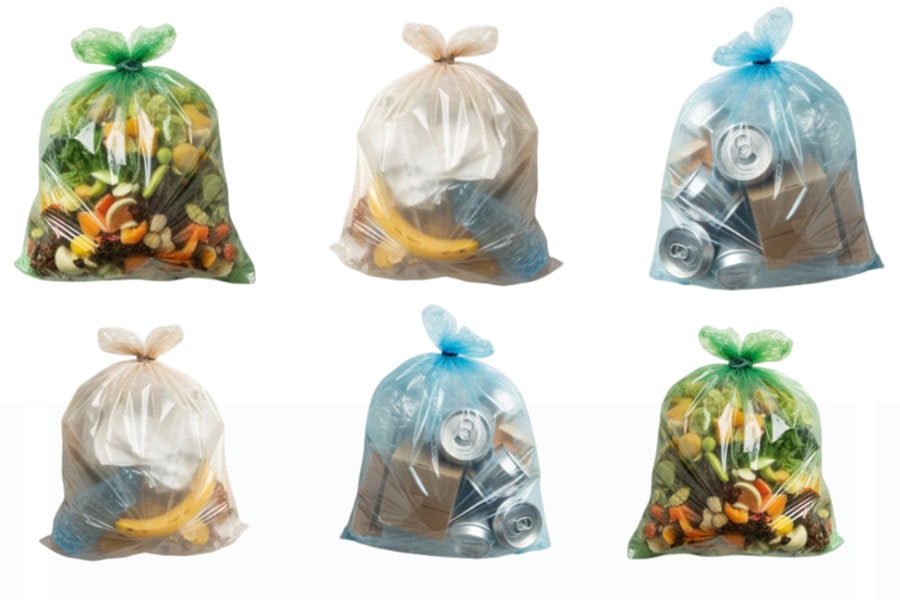
Consumers want a cleaner environment and homes. But choosing the right trash bag often creates confusion. There are lots of bags that claim to be compostable, biodegradable, or recyclable. Nonetheless, all the options have different modes of operation. So, wasting less, can be achieved by making good choices that support more sustainable practices.
This informative post defines these three types using simple words. It also demonstrates the most effective option between homes and businesses. You will also be informed about how disposal methods affect each bag.
Biodegradable bags decompose into organic substances. They become water, carbon dioxide, and biomass. Compostable bags are mostly made of corn starch, PLA, or plant fibers. They only decompose during proper composting. Heat, oxygen, and moisture must be in equilibrium.
Food waste can be put in compostable bags. They help reduce odors and also promote soil health because they leave no harmful residue. Nonetheless, they are not degraded in landfills. In addition to, landfills remain airless and cold. Compostable bags can thus not decompose in this place.
In addition, industrial composting facilities are not available in many cities. Disposal, therefore, becomes an issue in most locations. Although compostable bags are supposed to be the best option, they require systems that facilitate their use.
Biodegradable bags degrade more quickly than regular plastic bags. Microbes degrade the bag. But conditions must remain optimal for that to happen. The bag decomposes under the influence of heat, light, and oxygen.
Nevertheless, many biodegradable bags contain additives. These are additives to fragment the bag. The little bits can be kept up for years. And so the bag might not go wholly back to nature. This renders biodegradable bags less environmentally friendly than they should be.
Besides, the biodegradable bags also fail to decompose in the landfills. Landfills are devoid of light and oxygen. So decomposition slows down. As a result, in most instances, biodegradable bags will act just like regular plastic bags do.
Recyclable trash bags are made from materials such as HDPE or LDPE. Recycling can be done through the right recycling systems. These bags decrease the consumption of new plastic. They also contribute to the development of a loop waste stream.
It is, however, what is contained in the bag. A trash bag is dirty, and it cannot be sent to recycling units. The bag is not suitable for food waste and liquids. Clean and dry waste is best recycled.
Baggy bags are recyclable, strong, and sturdy. They are suitable for both home and business use. They also consume less energy to produce than compostable and biodegradable products. This reduces their carbon footprint.
The most environmentally friendly alternative will require a decision based on disposal patterns. Knowing every system makes you make the correct choice.
Compostable bags would work best in your city if it has access to composting. They combine with organic substances. They also enhance soil quality. But they fail in landfills. It is only to compost that they should be chosen.
Biodegradable bags help minimize litter in open spaces. However, they fail to address the long-term problem of plastic waste. They can be fractured into mini-pieces. They are therefore not particularly beneficial to the environment.
Recycling bags contribute to the usage of new plastics. They are also in favor of circular systems. Recycling programs are available in most cities. In this way, recyclable trash bags can be the most feasible and friendly solution.
Besides, these bags can handle heavy waste without tearing. They also consume less energy in production. They provide a convenient, quick, easy-to-use and green option.
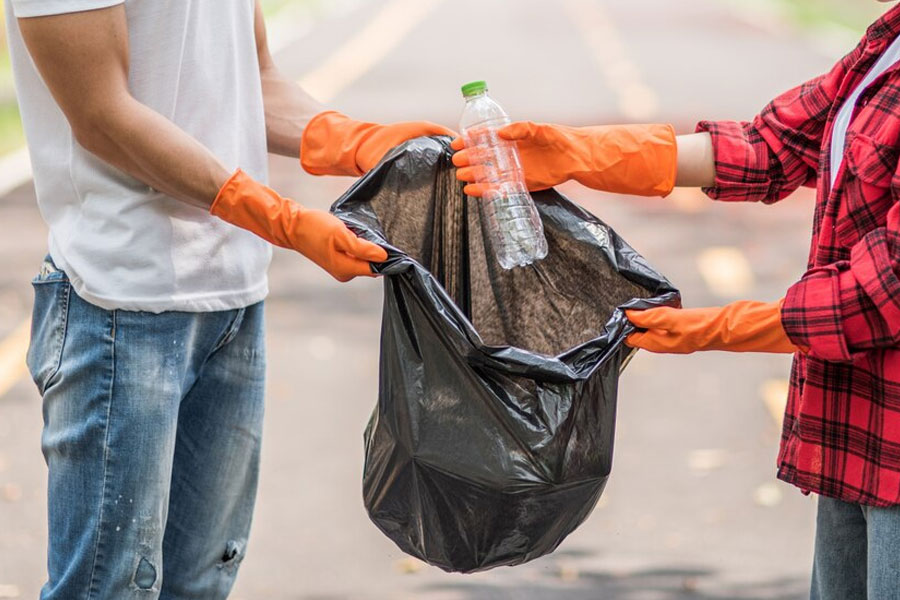
The waste model of your city will determine your influence. Composting requires compostable bags. Recycling requires bags that can be recycled. Being without these systems, your decision does not really count.
Compostable bags are appropriate for kitchen waste. Dry waste is suitable for recyclable bags. Combustible waste requires heavier bags.
In case you need rapid decomposition, compostable bags can be used. Recyclable bags are the best solution for reducing plastic production.
Buyers are very likely to get confused by the marketing terminologies. Biodegradable bags are popular because they sound green. However, the biodegradable bags might not actually provide environmental benefits. Compostable bags can only work in appropriate composting systems. Recycled bags will be a viable solution for most households.
As such, the most sustainable alternative would require your waste ways. Select bags at all times to suit your local systems. Check label certifications too. Ethical decisions aid in minimizing waste in the long term and conserving natural resources.
Finally, recyclable trash bags can be the most predictable source of eco-benefits for people who use them. They suit city systems. They also promote circular production.
Shopping Bags, a pioneering manufacturer of Plastic Shopping Bags in the USA, continues to provide influential, trustworthy, and environmentally friendly trash bag services to companies and households across the USA.