


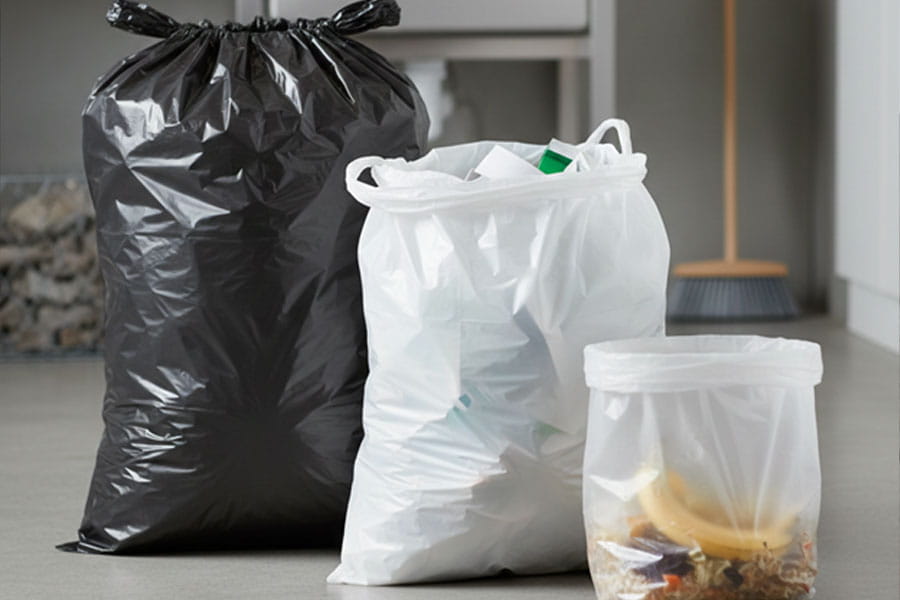
Trash bags feel like a small detail until the wrong one splits at the worst moment. Anyone who has cleaned a leaking kitchen bin or dragged a ripped bag across the floor understands this pain. The right bag keeps daily cleanup simple and stress free. The wrong bag adds mess and wastes time.
This guide offers an analysis of different types of trash bags available in the market, their strength, and suitable places for use. The aim is to assist the consumers in selecting the appropriate trash bags rightly and at the same time making the choice of bags that suit the actual needs in the real world with full knowledge of the situation. The focus stays practical, clear, and easy to follow.
ANS Plastics Corp designs bags that balance strength, flexibility, and everyday use. Many buyers overlook small details, such as thickness or size, yet those details decide how well a bag performs.
Trash bags may look similar, but materials change how they perform. Most bags are made from plastic resins that affect stretch and strength. Some bags focus on flexibility. Others focus on structure.
Many bags are designed to handle specific waste types. Thin liners work for light household waste. Thicker bags manage heavy loads without tearing. A leak proof design prevents spills, while tear resistant film reduces split seams.
Bag construction also affects how it feels when lifted. A strong base supports weight evenly. Side seals help hold shape. These details matter more than branding.
Kitchen bags handle the most frequent use. They deal with food waste, wrappers, and everyday mess. Most kitchens use medium garbage bag sizes that fit standard kitchen bins.
These bags should stretch without ripping. They should also seal odors well. Drawstring styles help close bags fast and reduce spills.
Common features include:
Kitchen trash bags work best when they fit snugly. A loose fit slips down. A tight fit tears. Matching the bag to the bin avoids frustration.
Some tasks push bags harder. Garage cleanups, move outs, and renovations need tougher support. Heavy duty bags handle construction debris, broken items, and sharp edges.
These bags often come thicker and stronger. They resist punctures and hold shape under stress. A larger capacity also helps when cleaning bulky waste.
Heavy duty bags are ideal for:
An oversized bag helps reduce trips. A larger bag also lowers the risk of overfilling. Bags are designed for control, not stretch alone.
Outdoor cleanup creates a different challenge. Grass clippings, leaves, and branches add volume fast. Yard bags support yard waste without collapsing.
These bags often stand upright. Many include reinforced seams. Some models support composting or recycling programs.
Yard waste bags handle:
Some buyers prefer biodegradable bags for garden use. These bags break down faster and support eco-friendly options for disposal. Choosing the right bag type keeps outdoor cleanup simple.
Modern households often sort trash. Recycling, composting, and disposal each need a different solution. Specialty bags support these habits.
Compost bags support organic waste and reduce odors. Recycling bags often stay clear for sorting. Storage bags help separate items before disposal.
Specialty bags work well for:
Some biodegradable bags suit food scraps only. Others handle light trash. Always match the bag to its purpose to avoid leaks.

Size matters more than expected. Using the wrong size causes slipping or tearing. Always match the bag to the bin volume.
When selecting bags, consider:
Small bins work with thin liners. Large cans need reinforced bags. Garbage bag sizes vary widely, so measuring the bin helps.
Strength also matters. Wet waste needs thicker films. Dry waste can use lighter options. Bags are designed for balance, not excess.
Trash bags support daily routines. The best choice fits habits, not marketing claims.
Keep these tips in mind:
Using the right bag saves time and cleanup effort. It also prevents spills and odors. Thoughtful selection leads to cleaner spaces.
The right trash bag simplifies life. From kitchen cleanup to outdoor projects, each bag type serves a clear role. Choosing wisely avoids leaks, tears, and wasted effort.
ANS Plastics Corp focuses on reliable solutions that meet real needs. Buyers who understand materials, size, and purpose make better decisions every time.
Take a moment to review waste habits. Match bags to daily tasks. Make informed choices that support cleaner spaces and smoother routines. The right bag always makes cleanup easier.